


Table of Contents
- The Real Price Tag: Why Ethical Clothing Costs More Than Fast Fashion
- The Cost Breakdown of Sustainable Clothing: Where Your Money Goes
- Fast Fashion vs. Sustainable Pricing: What You're Really Paying For
- The Hidden Environmental Cost of Cheap Textiles
- How to Identify Greenwashing in Fashion and Spot Real Commitments
-
How to Build a Sustainable Wardrobe on a Budget
- Strategy 1: Start with What You Already Own
- Strategy 2: Embrace the Circular Economy
- Strategy 3: Prioritize Cost-Per-Wear Over Sticker Price
- Strategy 4: Shop Sales and Off-Season
- Strategy 5: Invest in Versatile, Durable Staples
- Strategy 6: Consider the True Cost of Fast Fashion
- The Bottom Line: Ethical Fashion Is Possible on Any Budget
- Conclusion: The True Value of Purpose-Driven Clothing
- Frequently Asked Questions
Last Updated: September 8, 2026
The Real Price Tag: Why Ethical Clothing Costs More Than Fast Fashion
The question of why ethical clothing costs more than fast fashion comes down to a single truth: you are paying for the cost of doing things right. When a garment is made with organic cotton, sewn in a factory that pays a living wage, and certified by third-party auditors, the production process costs more at every stage. Understanding this breakdown is the first step toward intentional choices.
Ethical clothing is apparel produced under conditions that prioritize environmental sustainability and worker welfare over maximum profit margins, opposing the fast fashion model that externalizes environmental damage and labor exploitation. The price gap is not a marketing markup; it is the true cost of accountability.
Below, we’ll break down exactly where your money goes, how to spot genuine commitments versus greenwashing, and how to build a sustainable wardrobe on a budget without compromising your ethics.
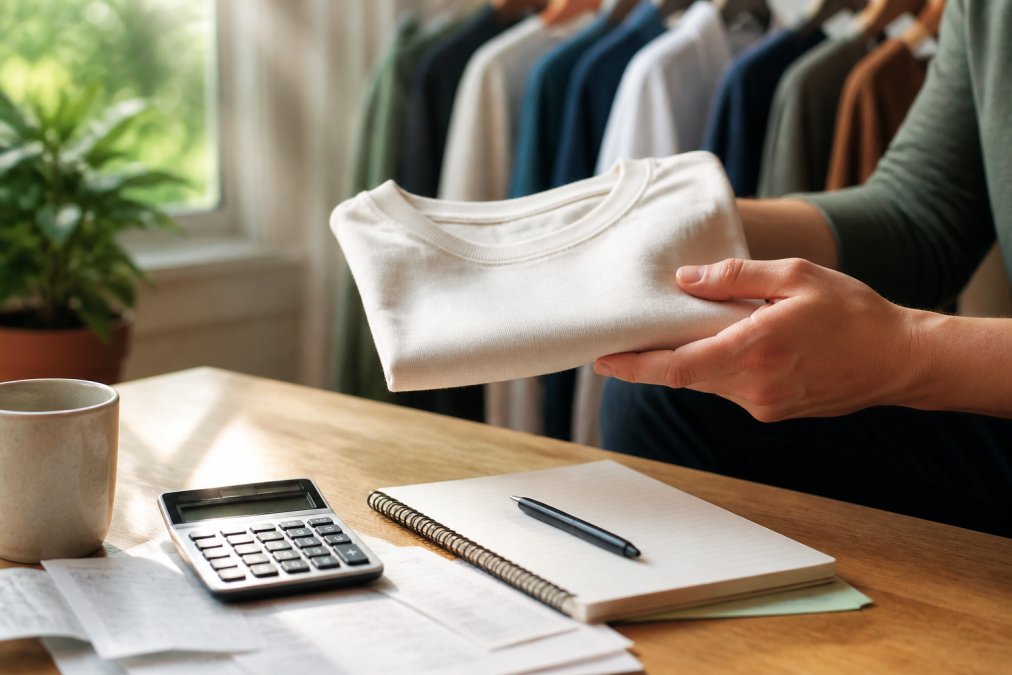
The Cost Breakdown of Sustainable Clothing: Where Your Money Goes
To understand the price difference, trace the garment back to its origin. Each step of the sustainable supply chain carries costs that conventional fashion ignores.
Material Sourcing: Organic Cotton and Biodegradable Fabrics
Conventional cotton is one of the most pesticide-intensive crops in the world. Organic cotton eliminates synthetic pesticides and fertilizers, relying on crop rotation and natural methods that preserve soil health, but these methods yield less per acre, driving up the raw material price. Biodegradable fabrics like Tencel or hemp require specialized processing that avoids toxic chemicals, adding another layer of cost.
Ethical Labor and Fair Wages for Garment Workers
The largest cost difference lies in labor. Fast fashion relies on factories with unsafe conditions and wages far below a living standard. Ethical clothing brands partner with facilities that guarantee fair wages, reasonable hours, and safe environments. This is not charity; it is the baseline cost of human dignity.
Certifications, Supply Chain Transparency, and Quality Control
Verifying ethical claims costs money. Certifications like Fair Trade or GOTS require annual audits and fees. Brands investing in supply chain transparency employ dedicated teams to trace materials and enforce standards. Quality control also tightens: higher-grade stitching and durable fabric mean fewer defects, but also slower, more careful production. These costs are baked into the final price.
Fast Fashion vs. Sustainable Pricing: What You're Really Paying For
Fast fashion is engineered for volume and velocity, not longevity. Sustainable fashion is engineered for accountability and durability. These produce measurably different cost structures.
The Fast Fashion Business Model: Volume Over Value
Fast fashion retailers operate on a simple premise: produce as much as possible, as cheaply as possible, and move it before trends shift. This model relies on key mechanisms:
- Rapid production cycles: Where traditional fashion operated on two to four seasons per year, fast fashion brands release new styles weekly or even daily. This requires factories to prioritize speed over quality, often cutting corners on stitching, seam reinforcement, and fabric finishing.
- Economies of scale: Producing millions of units of a single design drives down per-unit costs dramatically. A factory that produces 10,000 units of one shirt can negotiate lower fabric prices than one producing 500 units of a similar design. This is why ethical brands, which produce smaller batches, face higher per-unit costs that they must pass on to consumers.
- Externalized costs: The sticker price of a fast fashion garment does not include the cost of the water pollution from dyeing, the carbon emissions from shipping, or the healthcare costs of workers in unsafe factories. These costs are shifted onto communities, ecosystems, and taxpayers. A 2023 analysis by the Ellen MacArthur Foundation on the circular economy in fashion estimated that the fashion industry produces over 92 million tons of waste annually, most of which is not recycled or composted.
The Sustainable Fashion Cost Structure: Internalizing What Fast Fashion Ignores
Sustainable fashion brands internalize costs, meaning the price you pay reflects the true cost of production. This includes:
- Fair wages and safe working conditions: Ethical brands pay living wages, which can be 2-3 times the minimum wage in garment-producing regions, and invest in safety training and reasonable working hours.
- Certification and auditing fees: Third-party certifications like Fair Trade, GOTS, and B Corp require annual audits, documentation, and fees. For a small brand, these costs can run into the tens of thousands of dollars annually.
- Higher-quality materials: Organic cotton, hemp, and Tencel cost more than conventional cotton or polyester. The price difference at the raw material level is typically 20-50% higher.
- Smaller production runs: Ethical brands often produce in smaller batches to avoid overproduction, meaning they cannot achieve the same economies of scale as fast fashion giants.
The Cost-Per-Wear Framework: A Practical Way to Compare
The most honest way to compare fast fashion and sustainable fashion is by cost-per-wear, which evaluates the true value of a garment over its lifetime:
Cost-Per-Wear = Purchase Price ÷ Number of Times Worn
Consider two examples: a $15 fast fashion t-shirt that pills after three washes and is worn 10 times has a cost-per-wear of $1.50. An $80 ethical t-shirt made from organic cotton with reinforced seams, worn 100 times over three years, has a cost-per-wear of $0.80. The ethical shirt is nearly half the cost-per-wear.
The Hidden Subsidies in Fast Fashion Pricing
Fast fashion prices are artificially low because the system is subsidized in ways that are invisible to the consumer. These subsidies include:
- Labor exploitation: Garment workers in countries like Bangladesh and Vietnam often earn below a living wage. The International Labour Organization on garment worker wages reports that many workers in the ready-made garment sector earn wages that do not cover basic needs like food, housing, and healthcare.
- Environmental degradation: The fashion industry is responsible for approximately 10% of global carbon emissions, according to the United Nations Environment Programme. Water pollution from textile dyeing and finishing is another major cost that is not reflected in the price of a $5 dress.
- Waste management: When a fast fashion garment falls apart after a few wears, it ends up in a landfill. The cost of waste management is borne by municipalities and taxpayers, not by the brand that produced the item.
When you account for these hidden subsidies, the true cost of a fast fashion garment is significantly higher than its sticker price. Sustainable fashion, by contrast, prices these costs into the garment from the start, which is why the upfront price is higher, but the total cost to you, to workers, and to the planet is often lower.
Why the Comparison Matters for Your Wallet
A consumer who buys 20 fast fashion items at $15 each spends $300 on clothing that may not last the season, while one who buys 5 ethical items at $80 each spends $400 on clothing that lasts for years. The upfront difference is $100, but the cost-per-wear difference is dramatic. The question is not "Can I afford an $80 shirt?" but "Can I afford to replace a $15 shirt every month?"
The Hidden Environmental Cost of Cheap Textiles
The environmental impact of cheap textiles is staggering, though often invisible in the price tag. Textile waste clogs landfills, as synthetic fibers take centuries to decompose. The production processes for fast fashion consume vast amounts of water and release microplastics into oceans. According to the United Nations Environment Programme on fashion's environmental impact, the fashion industry is a major contributor to global carbon emissions and water pollution.
This is the hidden tax of fast fashion. When you buy a disposable garment, you are subsidizing a system that degrades the planet. Ethical clothing, with its focus on resource efficiency and biodegradable materials, attempts to minimize this damage. The higher upfront cost reflects a commitment to avoiding the long-term environmental debt that cheap fashion accrues.
How to Identify Greenwashing in Fashion and Spot Real Commitments
As consumer demand for sustainability grows, so does greenwashing, where brands make misleading claims about their environmental efforts. Distinguishing genuine commitment from marketing requires scrutiny. Look for specific, verifiable claims rather than vague buzzwords.
A good starting point is checking for third-party certifications. Labels like GOTS, Fair Trade, or B Corp indicate that an independent body has audited the brand’s claims. The Federal Trade Commission's Green Guides advise that environmental claims should be clear and substantiated. If a brand says "eco-friendly" without explaining how, treat it with suspicion.
Examine the brand’s supply chain transparency. Do they name their factories? Do they publish details about material sourcing? Genuine sustainable fashion brands are usually eager to share this information. Vague statements about "sustainability" without concrete data are a red flag. Remember, a $10 t-shirt claiming to be "green" is almost certainly cutting corners somewhere, likely in labor or materials.
How to Build a Sustainable Wardrobe on a Budget
The most common objection to ethical fashion is "I can't afford it," especially when a single ethical t-shirt can cost $60 or more. But building a sustainable wardrobe does not require a large budget, it requires a different approach.
Strategy 1: Start with What You Already Own
The most sustainable garment is the one you already own. Before buying anything new, take inventory of your closet and identify items in good condition that you rarely wear. Ask: Can this be repaired, altered, styled differently, or repurposed? Repairing a torn seam or replacing a button costs a few dollars and extends a garment's life by months or years. Local tailors often charge $10-20 for simple alterations, far less than a new garment.
Strategy 2: Embrace the Circular Economy
The second most sustainable garment is one that is pre-owned. The second-hand market makes it easier than ever to find high-quality ethical clothing at a fraction of the retail price. Thrift stores like Goodwill and local consignment shops offer items from $2 to $15; visit regularly and look for natural fibers like cotton, wool, and linen. Online resale platforms like Poshmark, ThredUp, and Depop allow you to filter by fabric type, brand, and condition. Clothing swaps with friends or community groups are a zero-cost way to refresh your wardrobe.
Strategy 3: Prioritize Cost-Per-Wear Over Sticker Price
When you do buy new, use the cost-per-wear framework. A $100 pair of ethical jeans worn 200 times costs $0.50 per wear; a $30 pair of fast fashion jeans worn 20 times costs $1.50 per wear. To make this work on a budget, build a capsule wardrobe of versatile staples: 2-3 pairs of pants, 3-5 tops, 1-2 outer layers, and 1-2 pairs of shoes. Limiting your wardrobe to items that mix and match drives down overall cost-per-wear.
Strategy 4: Shop Sales and Off-Season
Ethical brands have sales cycles. Sign up for email newsletters to get notified of seasonal sales, which often offer 20-40% off. Many brands also offer first-time customer or loyalty discounts. Shopping off-season, buying a winter coat in March or a linen shirt in September, can save 30-50% on items you would buy anyway.
Strategy 5: Invest in Versatile, Durable Staples
When you do buy new, prioritize quality over quantity. Look for natural fibers like cotton, wool, linen, and hemp, which are more durable and biodegradable than synthetics. Check for double-stitched seams, a sign of higher quality. Avoid trend pieces; invest in timeless silhouettes. Use the "30-wear test": before buying, ask if you will wear it at least 30 times.
Strategy 6: Consider the True Cost of Fast Fashion
When tempted by a $10 fast fashion dress, remember the low price comes at a cost someone else pays. The worker may earn less than $3 per hour, the factory may discharge untreated wastewater, and the garment may end up in a landfill after a few washes. This does not mean you should feel guilty for every fast fashion purchase, many buy it because they have no other option. But shifting even a portion of your spending toward second-hand and higher-quality items supports a more ethical fashion system.
The Bottom Line: Ethical Fashion Is Possible on Any Budget
Building a sustainable wardrobe on a budget is about buying smarter, not buying more. By starting with what you own, embracing second-hand options, prioritizing cost-per-wear, and investing in versatile staples, you can align your wardrobe with your values without compromising financial stability.
Conclusion: The True Value of Purpose-Driven Clothing
The higher price of ethical clothing is not a penalty; it is an investment in a better future, covering fair wages, sustainable materials, and a healthier planet. Choosing purpose-driven clothing means rejecting the disposable culture of fast fashion. At Nature Works, we create apparel designed to spark conversations about environmental protection. Our nature-inspired designs serve as a catalyst for awareness, encouraging reflection on the choices we make for the planet's future.
Frequently Asked Questions
What are the primary factors that drive up the cost of ethical clothing?
The main factors are material sourcing, ethical labor, and production scale. Sustainable materials like organic cotton cost more than synthetic fibers. Fair wages for garment workers and safe factory conditions add to the price. Smaller production runs also miss out on the economies of scale that fast fashion uses to lower costs. These elements combined create a higher upfront cost, but a lower cost-per-wear because the garment lasts longer.
Is it possible to find affordable ethical clothing brands?
Yes, but you often need to adjust your shopping habits. Look for sales from ethical brands, or explore second-hand and circular economy platforms where pre-owned sustainable fashion is sold at a fraction of the retail price. Focusing on cost-per-wear rather than the initial price tag helps, too. A durable, well-made piece you wear weekly for years is more affordable than a cheap top that falls apart after a few washes.
How does the use of organic or recycled materials affect production costs?
Organic cotton and biodegradable fabrics require more careful farming and processing, which costs more than conventional methods. Recycled materials also need specialized collection and processing systems. These sustainable certifications ensure stricter environmental and social standards, but the certification process itself adds a cost that mass-produced synthetic fibers do not carry. This is a key part of the cost breakdown of sustainable clothing.
What is the difference between fast fashion pricing and sustainable pricing?
Fast fashion pricing hides the true cost of production, often at the expense of garment workers and the environment. Sustainable pricing reflects the real costs: living wages, safe factories, eco-friendly materials, and transparent supply chains. While fast fashion appears cheaper upfront, its environmental impact and shorter lifespan lead to more textile waste and higher long-term costs for the planet and your wallet.